
The idea: a DoorDash-style app for mobile car washes, connecting customers to independent vendors ("sparklers") who come to you. Like DoorDash and Uber, a two-sided marketplace like this eventually needs two apps, one for customers, one for sparklers. This case study covers the customer-facing experience I designed first.
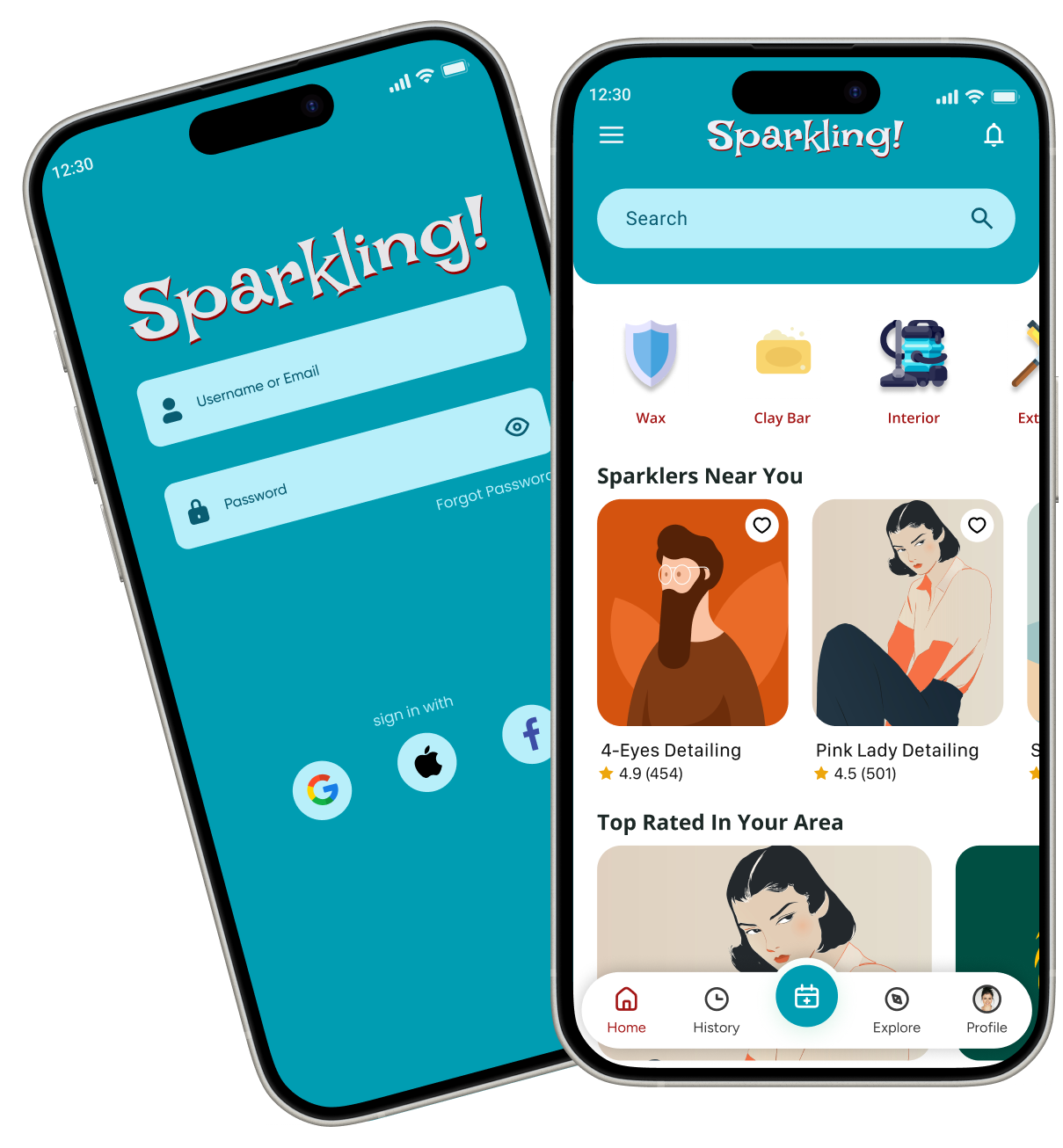
Design a booking experience that feels as effortless as ordering food but for a service that's inherently more complex: scheduling, location, and trusting a stranger with your car. The goal was to remove friction and build confidence at every step, laying the groundwork for a platform where fairness eventually extends to both sides of the transaction.
My first pass at Sparkler leaned cool and dark, with a heavier typeface. Functional, but visually indistinguishable from typical delivery-app UI. The problem was tonal: 'Sparkler' refers to the result of the service, a freshly cleaned, sparkling car, so the interface needed to feel light and clean, not moody. I shifted to a brighter palette and switched to Roboto for a simpler, friendlier feel.
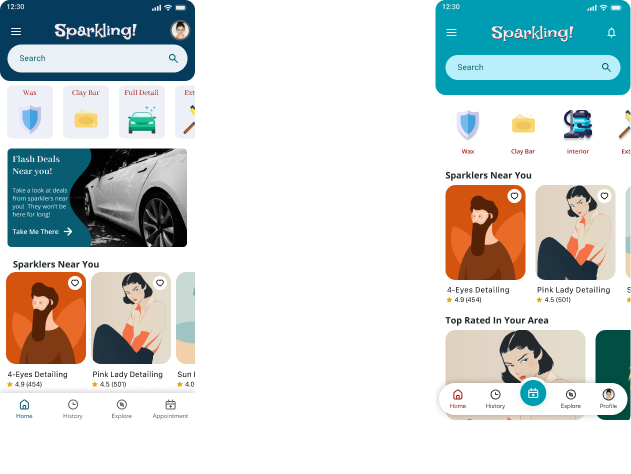
The change is suddle; the navbar's look, the placement of the user profile, the look of the buttons, section placement and of course color.
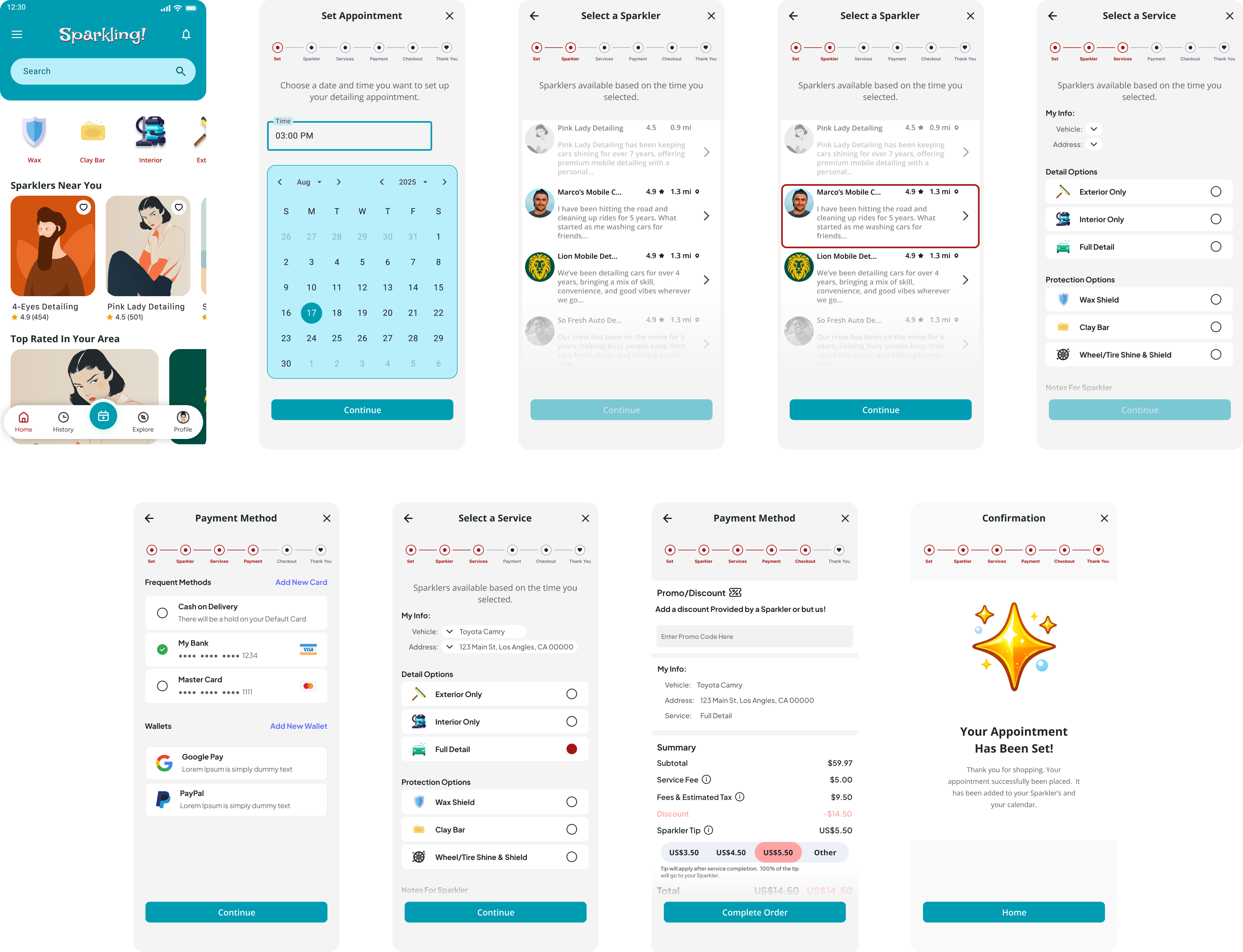
A closer look at the dashboard, user profile, and sparkler profile
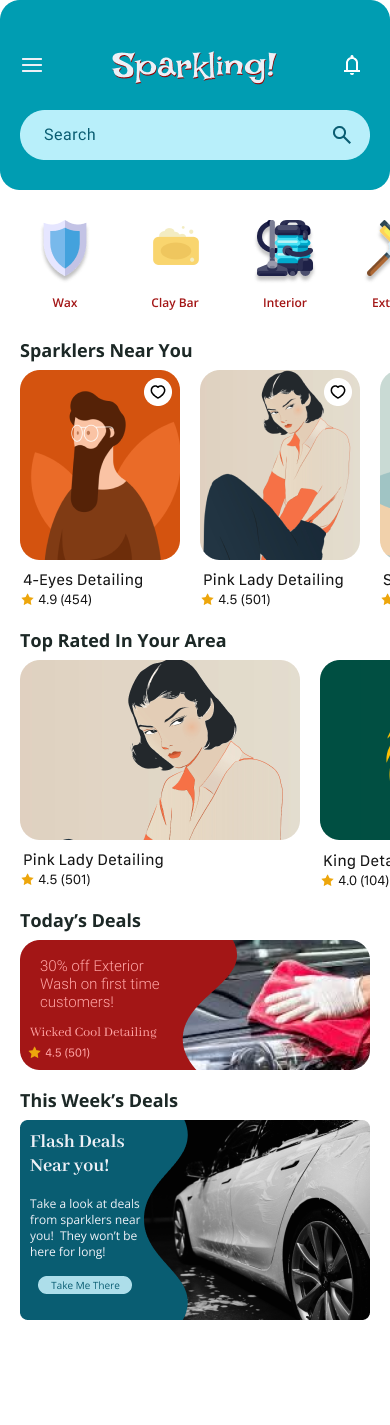
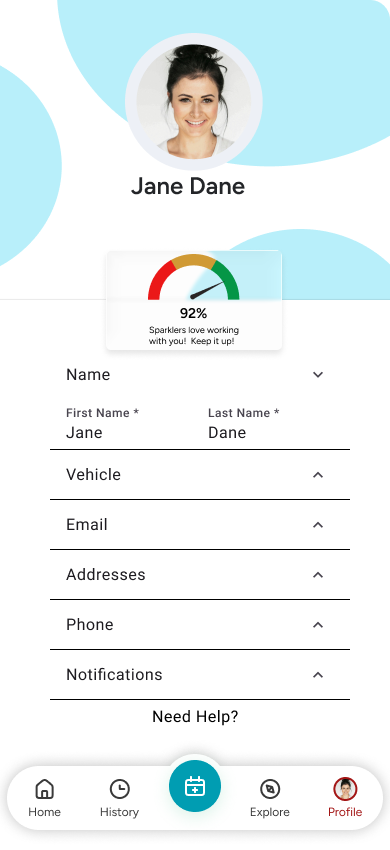
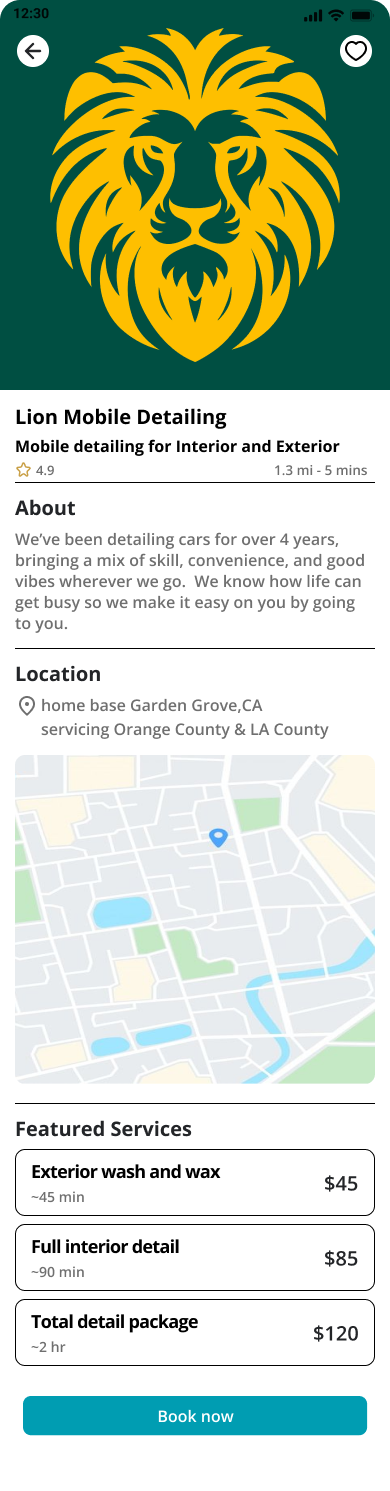
Sparkler actually started as a joke from my girlfriend who needed a car wash but neither of us had time. I used this idea as an excuse to challenge myself with something a little out there. I enjoyed this project and it brought out some real ideas for issues that I and others have experience in other gig app. Below are a few challenges I would tackle.
One feature I'm especially committed to: a two-way rating system. The user profile already shows a customer's rating, a foundation for this, but the harder half is unbuilt: letting sparklers rate customers back, with a reporting process for bad actors and protections like a probationary tip requirement for anyone found at fault. If you noticed in the user profile view, I added a rating, this is what that is for. As a DoorDash driver myself, I've been blamed for things outside my control with no way to defend myself, so this isn't a hypothetical feature to me, it's something I wish other apps had.